
News
Participatory workshop at the CES discussed the ethical and social challenges of artificial intelligence in the diagnosis of gastrointestinal cancer
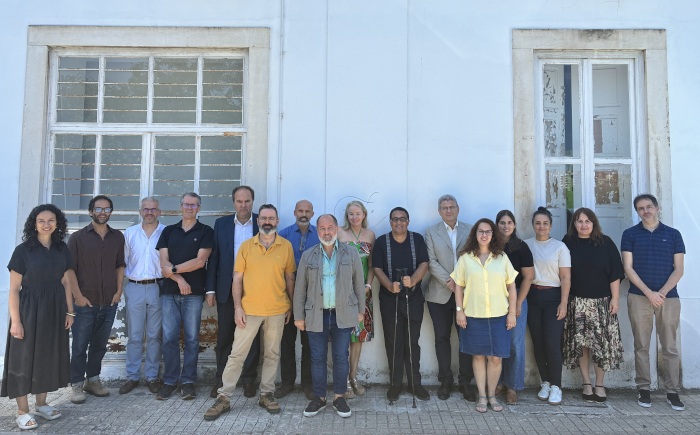
On 29 June, the Centre for Social Studies (CES) of the University of Coimbra hosted the participatory workshop ‘Imagining, Governing and Caring: Socio-technical, Ethical and Political Challenges of Artificial Intelligence in the Diagnosis of Gastrointestinal Cancer’. The initiative forms part of the G-quAI project - Predicting Gastrointestinal Cancer Using Quantum AI - and was the result of a collaboration between CES, Quantum@UC, the Faculty of Science and Technology of the University of Coimbra (FCTUC) and EVITA - Hereditary Cancer Association.
The workshop aimed to create a space for critical and interdisciplinary reflection on the impact of artificial intelligence (AI) in this area of healthcare, focusing on the values, concerns and expectations of the various stakeholders regarding the use of AI in the diagnosis of gastrointestinal cancer and its respective impacts on clinical and technological research, healthcare provision and the governance of health data.
It brought together researchers in AI, health sciences and social sciences, healthcare professionals, experts in bioethics and law, representatives of patient organisations, and people with personal experience of diagnosis or illness. They shared their diverse experiences, perspectives and expectations regarding the potential impacts of developments in AI and quantum computing on the prevention, diagnosis and treatment of gastrointestinal cancer, as well as on patient care and the interaction between different stakeholders within the healthcare system. The importance of data quality and careful data management, literacy and training in AI and healthcare, building trust in the use of AI, and the evolution of professionals’ skills and roles were some of the themes that emerged from the workshop.
The results of the workshop will now be analysed by the project team and discussed with participants, with the conclusions expected to be presented by the end of the year.
About G-quAI
The G-quAI project – Predicting Gastrointestinal Cancer Using Quantum AI, coordinated by Gabriel Falcão (FCTUC), is supported by the Open Quantum Institute (OQI-CERN) and funded by CERN - the European Organisation for Nuclear Research - and investigates the uses of quantum computing and artificial intelligence applied to the processing of large volumes of medical images, with the aim of improving the detection of anomalies and supporting the early diagnosis of malignant lesions.
The CES team, comprising Tiago Santos Pereira (coord.), Álvaro Mendes and Patrícia Ferreira, seeks to combine advances in AI and quantum computing with the expertise of the various stakeholders, situating the technological innovation developed through the G -quAI project within the social, ethical and political contexts that shape it, promoting a critical and reflective approach to its use, and helping to strengthen social responsibility by aligning technological development with principles of justice, equity and care.
30.06.2026